
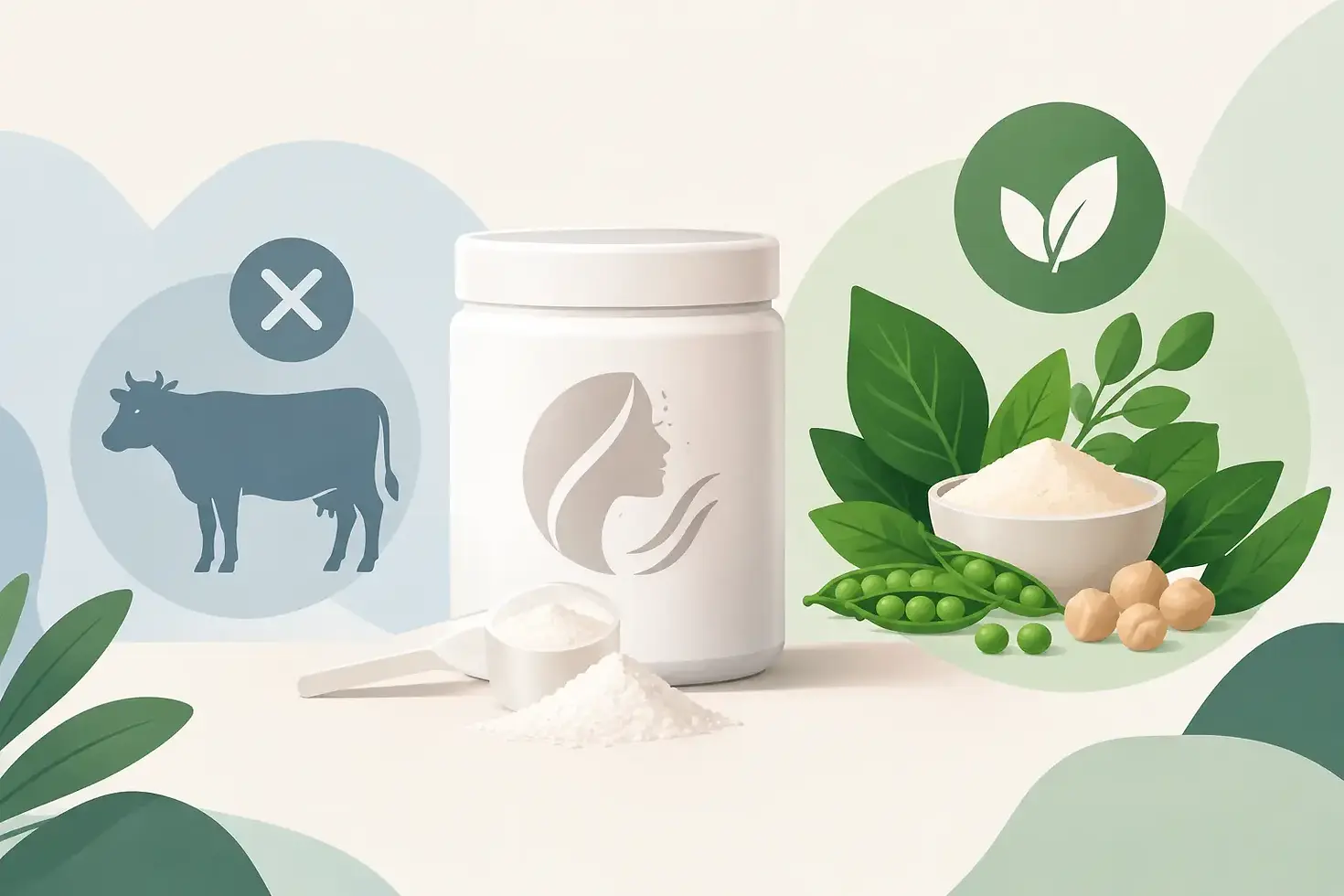
Are Collagen Supplements Vegan? What to Know
A beauty supplement can look perfectly plant-forward on the shelf, then turn out to be made from fish skin or bovine hide. So, are collagen supplements vegan? Traditional collagen supplements are not. Collagen is an animal-derived protein, usually sourced from cows, fish, chickens, or pigs.
That does not mean vegan shoppers have to skip the idea of supporting healthy-looking skin, hair, and nails. The key is knowing the difference between actual collagen, vegan collagen alternatives, and everyday nutrients that help your body make its own collagen. A clear label can make all the difference when you are choosing products that match your wellness values.
Are Collagen Supplements Vegan by Default?
No. Most collagen powders, capsules, gummies, and drinks contain hydrolyzed collagen peptides from animal tissue. Bovine collagen comes from cows, marine collagen comes from fish, and chicken collagen is commonly associated with cartilage sources. Even when a product has minimal ingredients or a clean-looking package, it is not vegan if it contains these collagen peptides.
Collagen is the most abundant protein in the human body. It helps provide structure to skin, bones, tendons, cartilage, and connective tissues. Because humans naturally produce it, collagen has become a popular ingredient in beauty and wellness routines. But the collagen sold in most supplements is collected from animal byproducts, which makes it unsuitable for a vegan lifestyle.
Vegetarian status can be different. Some vegetarians may choose marine or bovine collagen, depending on their personal approach, but neither option is vegetarian in the strict sense. If avoiding animal-derived ingredients matters to you, look for a product that clearly says vegan rather than relying on terms such as natural, clean, or cruelty-free.
What Does “Vegan Collagen” Usually Mean?
In most beauty and wellness products, “vegan collagen” does not mean the product contains the same animal-derived collagen peptides found in traditional powders. More often, it describes a plant-based formula designed to support your body's natural collagen production.
These formulas may include vitamin C, zinc, copper, silica, amino acids, and botanical extracts. Vitamin C is especially relevant because the body needs it to form collagen. Without enough of it, collagen synthesis is impaired, no matter how polished the rest of a routine may be.
Some brands also use plant-based ingredients such as bamboo silica, citrus extracts, amla, or algae-derived nutrients. The specific formula matters more than a trendy front-label claim. A vegan alternative may be a practical fit for someone who wants beauty support without animal ingredients, but it should not be presented as identical to ingesting animal collagen peptides.
There is also a newer category sometimes called bioengineered or fermentation-derived collagen. These ingredients are produced using microorganisms in controlled settings rather than harvested from animals. They can be promising, but vegan status depends on the full manufacturing process and all ingredients in the finished product. For a confident choice, look for clear vegan certification or direct language from the manufacturer.
Collagen boosters versus collagen replacements
A plant-based collagen booster supports the raw materials your body uses to make collagen. It does not directly replace your body's collagen stores. That distinction is worth keeping in mind when comparing products and setting expectations.
Traditional collagen peptides are widely studied, though results can vary based on dose, consistency, diet, age, sun exposure, and individual needs. Vegan beauty supplements take a different route: they focus on nutritional support. Neither option replaces sunscreen, balanced meals, sleep, hydration, or a skincare routine that works for your skin.
How to Read a Collagen Supplement Label
Ingredient lists are more useful than a product's front label. If you are looking for a vegan option, scan for clear animal sources first. Words such as bovine collagen, marine collagen, fish collagen, chicken collagen, porcine collagen, gelatin, and collagen peptides are signs that the product is not vegan.
A vegan-friendly supplement should state “vegan” clearly and list plant-based or fermentation-derived ingredients. It is also smart to check capsules and gummies. A formula may contain plant-based active ingredients but use gelatin in its capsule or gummy base. Vegetable cellulose capsules and pectin-based gummies are common vegan-friendly alternatives.
Be careful with broad claims that can sound more meaningful than they are. “Cruelty-free” generally means the finished product or ingredients were not tested on animals under a brand's stated policy. It does not guarantee a product contains no animal-derived ingredients. Likewise, “clean,” “naturally sourced,” and “eco-conscious” do not automatically mean vegan.
For an easy label check, focus on these four questions:
Does the package specifically say vegan or plant-based?
Are collagen peptides, gelatin, fish, or animal sources listed?
Is the capsule or gummy base free from gelatin?
Does the brand explain what its collagen-supporting ingredients do?
Clear answers help you shop with less guesswork and more confidence.
Choosing the Right Option for Your Routine
Your best choice depends on both your goals and your values. If you follow a vegan lifestyle, a well-formulated plant-based collagen support supplement may feel like the most natural fit. Look for useful nutrients rather than expecting a label alone to do all the work.
Vitamin C is a worthwhile ingredient to consider, particularly if your daily diet is low in fruits and vegetables. Zinc and copper may also be included in beauty-focused formulas, but more is not always better. Check the serving size and avoid stacking multiple supplements with high amounts of the same nutrient unless a healthcare professional has advised it.
If your goal is simply a more consistent self-care routine, you may prefer to start with the basics: adequate protein, colorful produce, regular hydration, daily SPF, and gentle skincare. Supplements can complement these habits, but they are not a fast fix for dry skin, hair shedding, or major skin concerns.
Affordability matters here, too. You do not need the most expensive powder or a long list of exotic ingredients to make a thoughtful choice. A straightforward vegan formula from a brand that clearly discloses its ingredients can be a better value than a product built around vague claims.
A Few Things to Keep in Mind
Even plant-based supplements can cause problems for some people. Botanical blends may not suit everyone, and certain nutrients can interact with medications or be inappropriate during pregnancy or breastfeeding. If you have a medical condition, food allergy, or take prescription medication, check with a qualified healthcare professional before adding a new supplement.
It is also wise to keep expectations realistic. Skin texture, nail strength, and hair appearance are influenced by many factors, including genetics, hormones, stress, nutrition, and environmental exposure. A supplement may support your routine, but it should not promise dramatic changes overnight.
For shoppers who care about responsible beauty, vegan status is only one part of the decision. You may also want to consider packaging, ingredient transparency, allergen information, and whether the formula fits your budget and daily habits. The easiest product to use consistently is often the one that earns a place in your routine.
A vegan lifestyle does not require giving up on beauty-focused wellness. Choose formulas with transparent labels, prioritize the nutrients that make sense for you, and let your everyday care habits do the steady work.


Comments